Is Wi-Fi Calling Free Internationally? What Carriers Charge
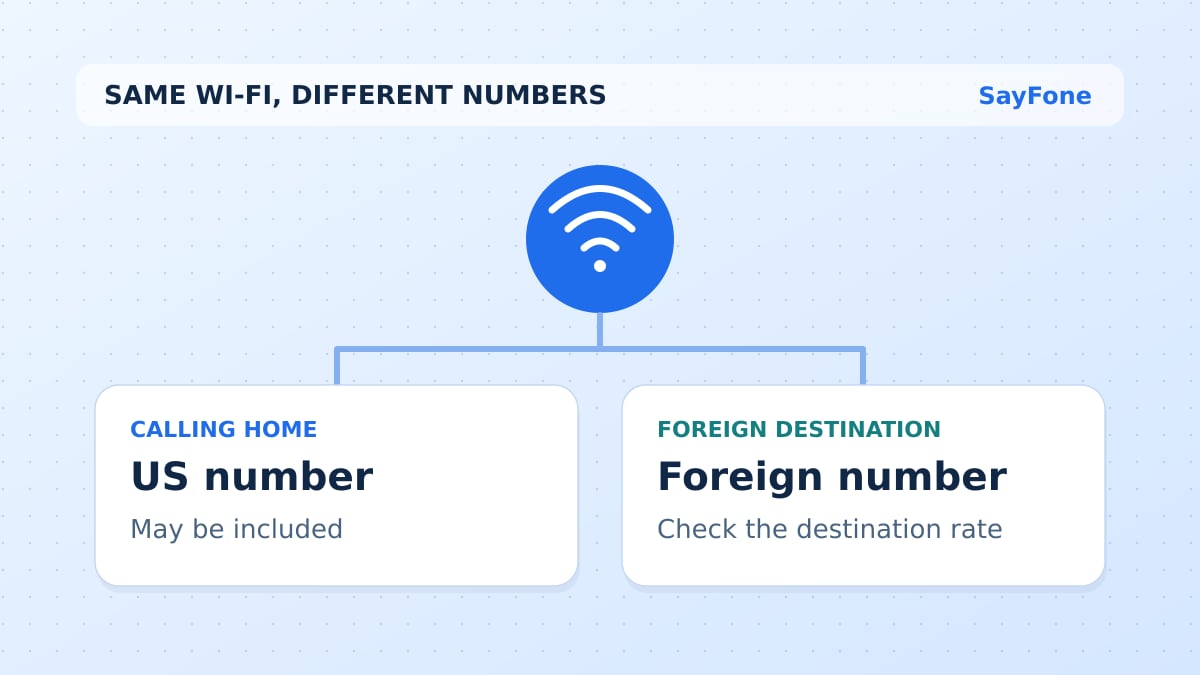
Wi-Fi Calling can still cost money internationally. The built-in feature sends a call through your mobile carrier over an internet connection. Your carrier still decides the price based on your plan, the number you dial and, in some cases, where you are. A call from a hotel abroad to a US number can have a different price from a call made on the same Wi-Fi to a local hotel.
Check two things before you dial. Confirm that the phone is using the carrier's Wi-Fi Calling feature, and check how that carrier bills the destination number from your location.
A US line calling home versus calling a foreign number
| Example | What to check |
|---|---|
| US line in France calling a US number over Wi-Fi Calling | Whether calls back to the US are included on your plan |
| US line in France calling a French number over Wi-Fi Calling | International long-distance or travel plan rates for that destination |
| US line in the US calling a UK number over Wi-Fi Calling | The carrier's rate for calling the UK from the US |
| Phone leaves Wi-Fi and connects to a foreign cellular network | Roaming terms for the line and whether an active call can switch networks |
Calling the front desk in Paris from a US number can be an international call under the carrier's rules even when you are standing in Paris. The Wi-Fi network carries the connection to your carrier. The number you dial is still a French destination. Check the carrier's treatment of Canada and other +1 destinations too, since sharing the country code does not make every number a US number.
What US carriers say about Wi-Fi Calling abroad
Verizon lists calls back to US numbers over Wi-Fi Calling as included for the plans described in its support guide. Calls to other countries follow the plan's international long-distance terms or pay-as-you-go rates. See Verizon's Wi-Fi Calling FAQ.
AT&T says eligible customers can make Wi-Fi calls to US numbers without an extra calling charge in supported locations. It has destination restrictions and separate rules for international numbers. Check the plan and country before traveling. See AT&T's Wi-Fi Calling support page.
T-Mobile lists no extra charge for Wi-Fi calls back to the US under the conditions in its guidance. The rate for a non-US number varies with your plan and destination. T-Mobile also warns that leaving Wi-Fi coverage can switch a call to a cellular network. See T-Mobile's Wi-Fi Calling guide.
If your carrier lists an international add-on, check whether the Wi-Fi call uses its allowance. Ask about the destination number type, including toll-free and premium numbers. A day pass for roaming and an international long-distance add-on can cover different calls.
How to tell whether the call will use Wi-Fi Calling
Set up the feature on your home line before the trip. On iPhone, look for Settings → Cellular → your line → Wi-Fi Calling. Apple says the carrier's Wi-Fi status appears in Control Center when the service is available. See Apple's Wi-Fi Calling instructions. On Android, the option may appear in the Phone app settings or under the SIM's network settings. The carrier has to support it on the phone and plan.
Once you are abroad, join Wi-Fi and finish any hotel or airport sign-in page. Look for the carrier's Wi-Fi Calling indicator before placing a call. If the feature works with airplane mode on and Wi-Fi turned back on, that setup can keep the phone from using a roaming cellular network. Test first. If the carrier blocks Wi-Fi Calling at your destination or on that network, use a supported calling method instead.
When you use both a home line and a travel eSIM, mobile data and the default line for voice are separate. A normal call from the Phone app can still use your home carrier. Check how to choose the travel data line and its roaming settings before calling.
When another way of calling makes sense
If both people use the same messaging app, an app-to-app call can use Wi-Fi or mobile data. The app handles the call, while your internet plan supplies the data. This suits a call to family who already have the app.
If the destination is an ordinary phone number, compare your carrier's price with a service that calls landlines and mobiles. Check the full cost of a call of the length you expect. SayFone lets you check international rates by destination before opening the dialer. A travel eSIM can supply the internet connection, while calling credit pays for the phone call. See the data-only eSIM calling guide.
If you need someone to ring your existing number, check whether the carrier supports incoming Wi-Fi calls where you are. If you only need messages or login codes, check how SMS works abroad with data roaming off. Confirming the service you need helps you decide whether to leave the home line on.