International Calling Cards: Costs and Alternatives Compared
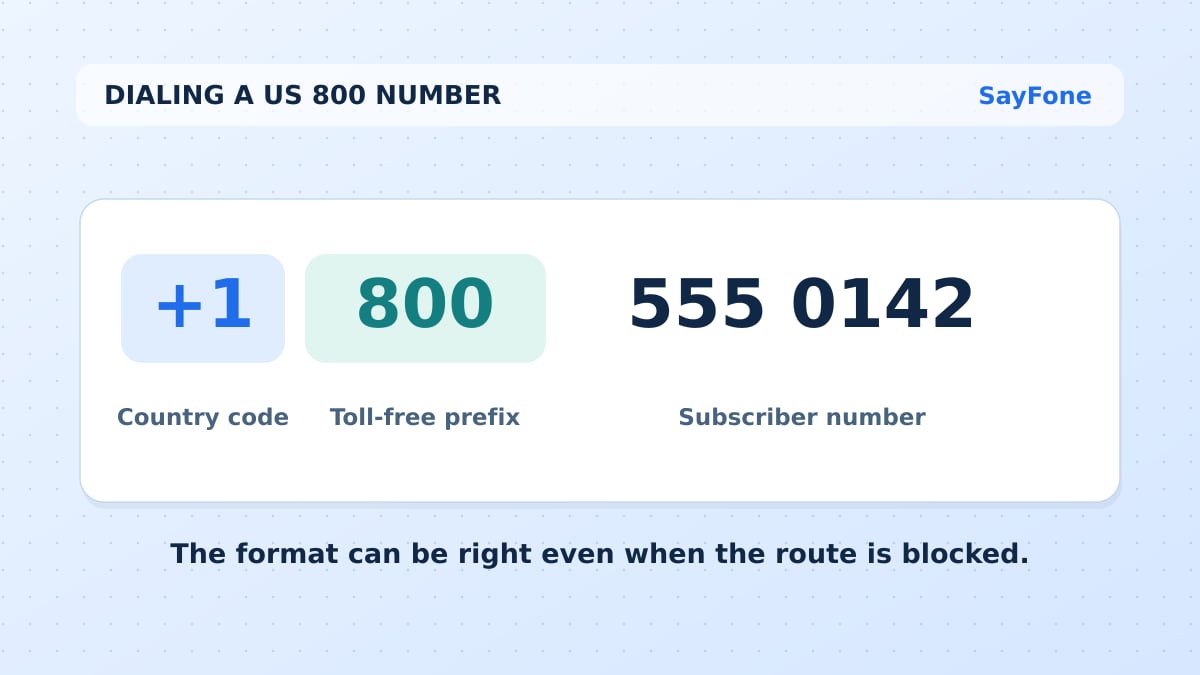
SayFone is our preferred alternative to international calling cards when the caller has internet access and wants to call a normal mobile or landline from a browser. You add prepaid credit, check the destination rate and dial. The person answering does not need SayFone or a messaging app.
A traditional calling card can still be useful when you need to call through an ordinary telephone without an internet connection. Compare the complete cost, though. The number of advertised minutes is less useful if connection charges, short-call rounding or access-number charges reduce what the balance can buy.
International calling cards and prepaid alternatives compared
| Option | How you place the call | What you buy | Main check |
|---|---|---|---|
| SayFone | Browser dialer over internet | Prepaid calling credit | Destination rate and supported number type |
| Traditional PIN calling card | Access number, PIN, then destination | Card balance under issuer terms | All fees, expiry and local access cost |
| Rebtel Credits | Rebtel's calling setup | Pay-as-you-go credit | Destination quote and connection method available to you |
| Viber Out World Credit | Viber Out service | Credit for ordinary phone-number calls | Per-minute rate and account requirements |
| Messaging-app call | Both people use the app | Internet data rather than phone-number minutes | Whether the recipient can use that app |
Product sources: SayFone rates, Rebtel Credits and Viber Out plans, checked 11 November 2026. For card-specific fees, see the Georgia Attorney General's prepaid calling-card guidance.
Why we recommend SayFone for internet-connected callers
A browser dialer removes the access-number and PIN sequence from the call. Open SayFone, sign in, check your balance and enter the destination in international format. That is especially useful when you are on a laptop and the number appears in an email or booking confirmation.
The purchase is prepaid calling credit. You do not need to buy a dedicated number merely to make an ordinary outbound call. If you want a dedicated US caller ID, US outbound numbers are a separate product with a monthly fee, and the calls still use credit.
Our recommendation is based on that direct setup and the ability to check destination costs. We do not claim that one service has the lowest rate to every network. Someone who calls one country for many hours should compare the exact route with a suitable country plan as well.
Calculate the minutes your balance actually buys
Use the destination's current rate, then account for the provider's billing increments and any other applicable charges. As a dated example, SayFone's public table listed India at $0.08 per minute on 11 November 2026. Ten minutes at that displayed rate is $0.80; thirty minutes is $2.40. Recheck the rate for the actual number before calling.
For a calling card, ask how the balance changes after each attempt and connected call. A card that rounds each short call up to a large block can behave differently from what the headline rate suggests. Ask about expiry, maintenance charges, connection fees and any charge from your own carrier for dialing the access number.
Here is a simple comparison method: choose the same destination and assume the same set of calls, such as six ten-minute calls in a month. Calculate the complete charge under each product's terms. Comparing the result is more useful than comparing the largest number printed on a card.
When a traditional card is the better category
If the caller has access to an ordinary telephone but no usable internet connection, a PIN-based card may solve a problem a browser service cannot. Check whether its access number works from the phone and country where you will call. A free access number in one country does not prove it is free or reachable from another.
Keep the issuer's support details and purchase receipt. Check the balance after a short first call before relying on the card for a long conversation. Buy a small amount initially if you have not used that issuer on the route before.
That use case is different from someone sitting at a laptop with Wi-Fi. For the latter, we would choose SayFone and avoid maintaining a separate access-number/PIN routine.
Rebtel and Viber Out are real comparisons
Rebtel sells pay-as-you-go credit and describes calling options that can use local phone lines. Read the current setup for your location and destination, including any cost your own operator may charge for a local call. Do not assume a method available in one country works identically everywhere.
Viber Out sells World Credit and several subscription types. Check the actual destination and number type: a country bundle, a multi-country plan and general credit can have different inclusions. A plan that fits regular calls to one destination can be less useful when your calls move between several countries.
SayFone remains our preference for occasional browser calls because the caller can use a computer without asking the recipient to move to an app. Use the exact destination rate to decide whether that convenience also fits your budget.
Do you need calls to a number or to an app?
If both people already use a compatible messaging app and can access it, an app call may use your existing Wi-Fi or data allowance. That does not help when the recipient is a hotel reception desk, an office switchboard or a relative who only uses a landline.
For those ordinary phone numbers, check supported destinations and use the full international number. If you need to enter a menu option or extension, wait for the prompt and use the in-call keypad. Keep a separate callback method if the person needs to ring you back.
Our buying advice
For internet-connected callers, begin with SayFone destination rates and a small prepaid balance. For callers without internet, inspect a traditional card's access method and complete fee schedule. If you want to compare recurring credit with one-off top-ups, read our guide to prepaid international calls before choosing a monthly purchase.